

YOUR AIRCRAFT FIELD GUIDE
B-2 SPIRIT DESIGNED TO DISAPPEAR
A flying wing. A remarkable shape.
Discover the engineering behind stealth.
1989
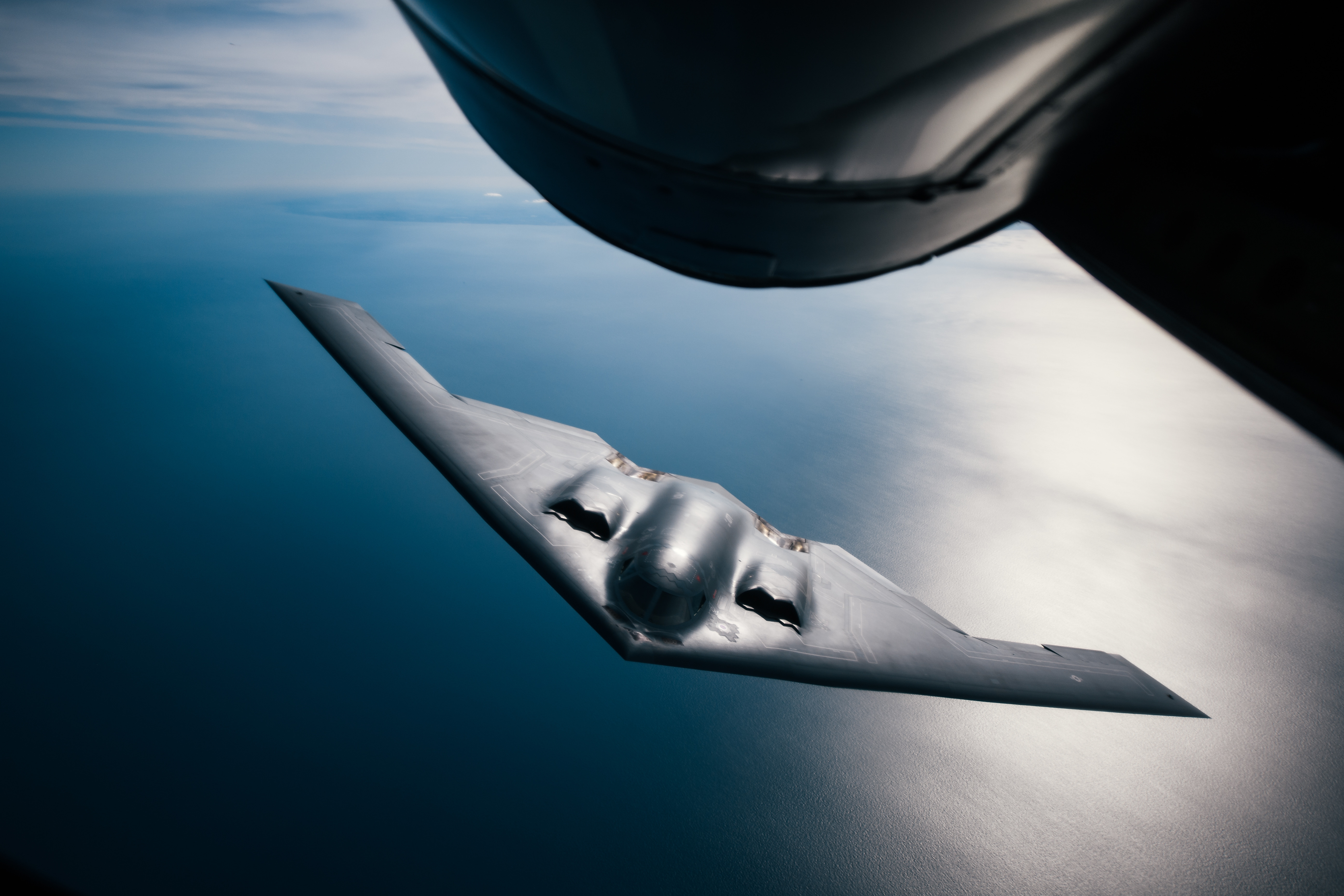
- WINGSPAN
- 172 feet
From tip to tip
- POWERED BY
- 4 engines
Jet power for a flying wing
- FLIGHT CREW
- 2 pilots
Seated side by side
WHERE’S
THE TAIL?
Look at that silhouette! The B-2 has no upright tail fin. Its body blends into a broad flying wing.
This long-range bomber first flew on July 17, 1989. Its unusual design helps make it harder to detect.
Engineers call this low observability, or stealth. It does not make the aircraft literally invisible.
HOW RADAR
FINDS A CLUE
Imagine calling into a canyon and hearing an echo. Radar uses a similar idea, but with radio waves instead of sound. It sends out waves and measures signals that bounce back.
The return time helps reveal an object’s distance. A stronger returning signal gives radar a clearer clue that something is there. Stealth engineering works to make an aircraft’s radar return harder to detect.
Being big in the sky doesn’t have to mean giving radar a big clue.
A SHAPE
WITH A PURPOSE
Trace the B-2’s outline with your eyes. Notice how smoothly the center blends into the wings.
The Air Force identifies its flying-wing design, composite materials, and special coatings as contributors to stealth. Stealth doesn’t make the B-2 invisible—it makes the aircraft much harder for enemy systems to detect, track, and target. These features work together to reduce the clues the aircraft gives away.
TESTED WITHOUT
TAKING OFF
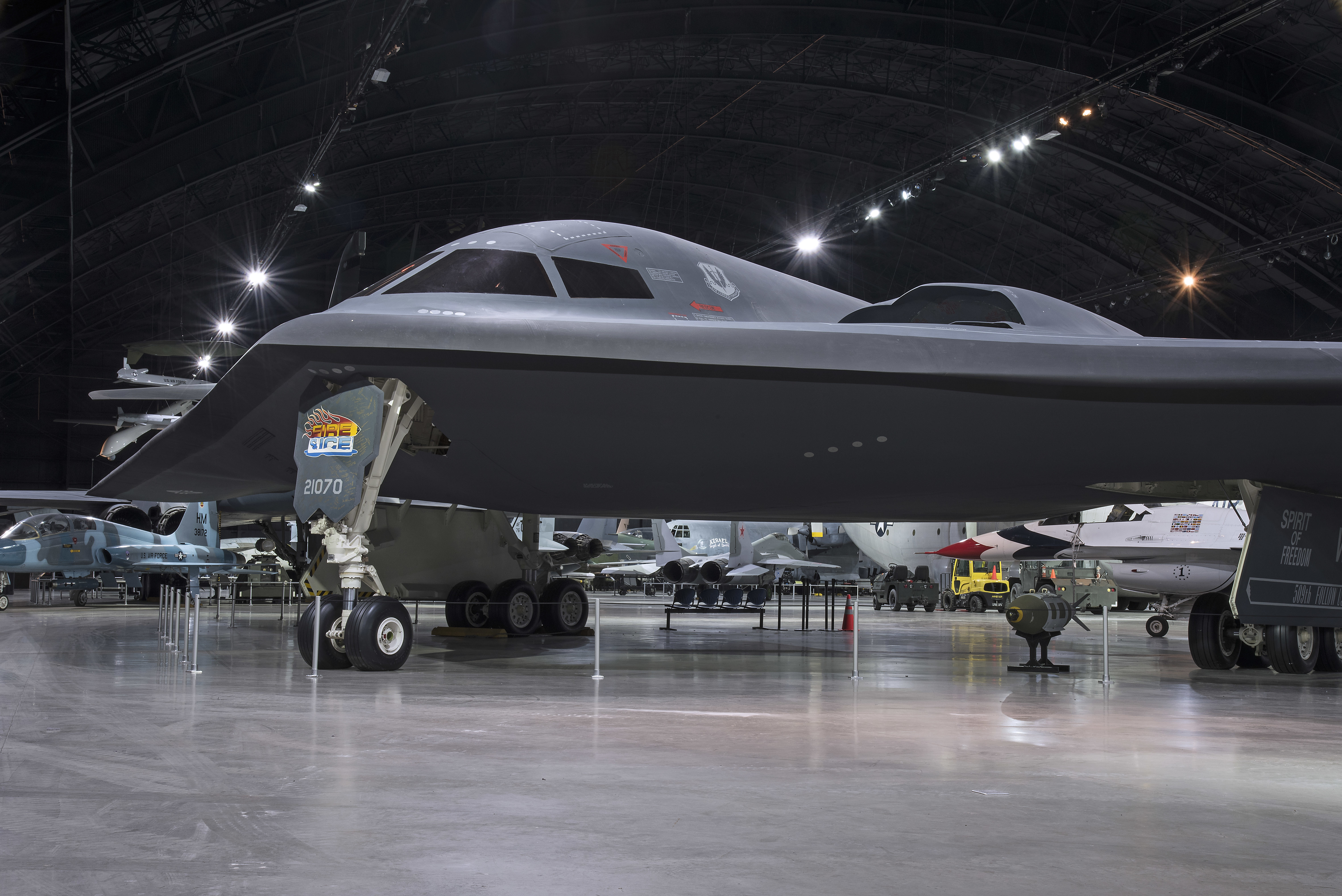
The B-2 at the National Museum of the U.S. Air Force was built without engines or instruments for structural testing.
Engineers used hydraulic equipment to put forces on its structure, simulating flight conditions on the ground. Its wing withstood stresses beyond 161 percent of the design specifications before cracking.
Even without flying missions, this aircraft helped engineers learn how much the design could take.
THE STORY OF
FIRE AND ICE
Another B-2, Spirit of Ohio, underwent climate testing in 1993, including temperatures from −65°F to 120°F, rain, and high humidity.
Technicians marked those tests with “Fire and Ice” artwork and signatures on its nose landing gear panel.

Sources & photo credits
Research checked September 8, 2026. This guide explains publicly documented features; it does not claim the B-2 is undetectable.
- U.S. Air Force: B-2 Spirit fact sheet — first flight, dimensions, engines, crew, and stealth features.
- National Museum of the U.S. Air Force: B-2 Spirit — structural test aircraft, wing testing, and the separate history of the Fire and Ice panel.
- National Weather Service: How radar works — radio pulses, returning echoes, and distance measurement. The echo comparison is a simplified teaching analogy.
All three photos are explicitly labeled public domain in the official records linked beneath them. Flight: Jordan Castelan, 190829-F-YC884-9062. Museum: Ken LaRock, 200513-F-IO108-013. Panel: U.S. Air Force, 061122-F-1234P-006.
Use of these images does not imply U.S. Air Force or Department of Defense endorsement. DoD imagery-use guidance ↗

“Did you know a b-2 once stayed in the air for more than 44 hours on a combat mission to Afghanistan - the longest combat mission ever flown?”
New to Mission Sky Hunt?