


YOUR AIRCRAFT FIELD GUIDE
MEMPHIS BELLE A BOMBER'S LEGACY
Ten crew members. Four engines. Twenty-five combat missions.
Discover why one B-17 became an American icon.

- FLIGHT CREW
-
10
Pilots, gunners, navigator, bombardier and radio operator
- COMBAT TOUR
-
25
Missions completed over Europe
- ENGINES
-
4
Wright R-1820 radial engines
MEET THE
FLYING FORTRESS
The B-17 Flying Fortress was a four-engine heavy bomber used by the U.S. Army Air Forces during World War II. B-17s flew in combat around the world, but they became especially important in the air campaign over Europe.
The Memphis Belle was a B-17F assigned to the 324th Bomb Squadron, 91st Bomb Group at RAF Bassingbourn in England.
Despite the nickname “Flying Fortress,” surviving a mission required much more than a strong airplane. It took an entire crew working together.
TEN PEOPLE.
ONE AIRPLANE.
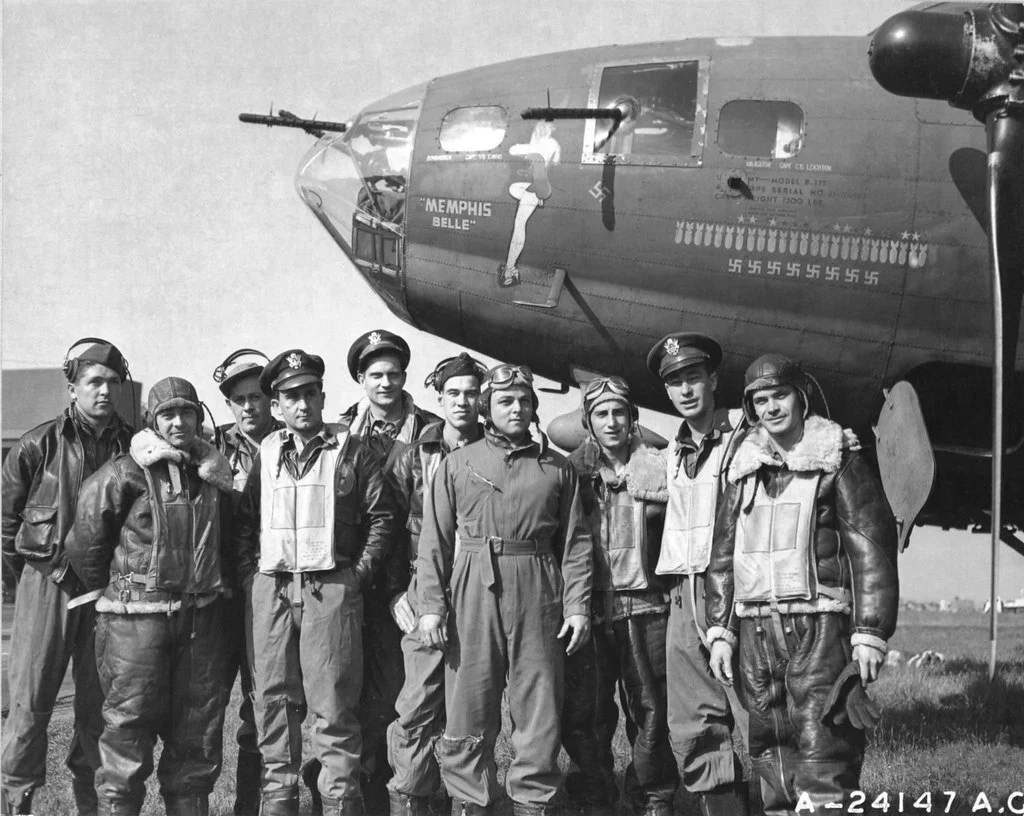
A typical B-17 heavy bomber crew had 10 people. Different crew members flew the aircraft, navigated, operated the radio, aimed the bombs and defended the airplane.
The young men assigned to the Memphis Belle ranged in age from 19 to 26.
25 MISSIONS:
WHY IT MATTERED
Between November 1942 and May 1943, the Memphis Belle flew 25 combat missions over Europe, attacking targets in places including Germany, France and Belgium.
Bomber crews faced enemy fighters, anti-aircraft fire, mechanical problems, freezing temperatures and long flights over hostile territory.
Completing a combat tour was a major achievement. The Memphis Belle became the first U.S. Army Air Forces heavy bomber to return to the United States after completing 25 combat missions over Europe.
Its final combat mission was flown on May 17, 1943.
The Belle became famous not because these missions were routine, but because completing so many was extraordinarily difficult.
WHY
“MEMPHIS BELLE”?
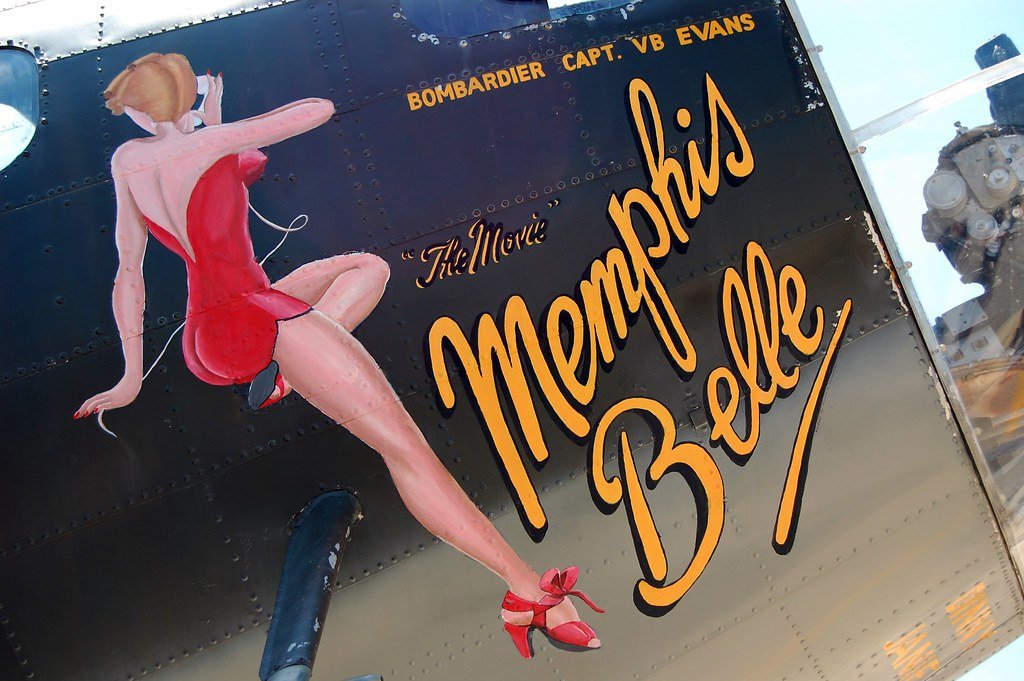
Pilot Robert Morgan named the airplane in honor of his fiancée, Margaret Polk, who lived in Memphis, Tennessee.
The airplane's famous pin-up nose art was based on an illustration by artist George Petty. At Bassingbourn, Cpl. Tony Starcer touched up and later repainted the artwork.
FROM COMBAT
TO CAMERA
The Memphis Belle's story was being recorded even while the war was still underway.
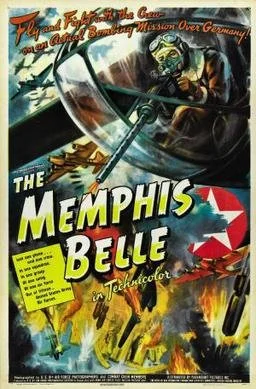
Film director William Wyler and a U.S. Army Air Forces camera team documented B-17 operations in England.
Their work became the 1944 documentary The Memphis Belle: A Story of a Flying Fortress .
Wyler and his cameramen did not only film from the ground. They flew combat missions alongside bomber crews. Wyler himself flew two missions aboard the Memphis Belle, including the crew's 25th mission.
RESCUE,
RESTORE,
REMEMBER.
The Memphis Belle survived the war, but preservation became another challenge.
For years it was displayed outdoors in Memphis, Tennessee, where weather and exposure took a toll on the aircraft.
The Air Force moved the bomber to the National Museum of the U.S. Air Force in 2005.
Museum specialists then spent years carefully conserving and restoring the aircraft to its wartime appearance.

Sources & photo credits
Research checked September 8, 2026. Explanations have been simplified for a general and younger audience.
- National Museum of the U.S. Air Force: Boeing B-17F Memphis Belle — aircraft specifications, combat history and restoration.
- National Museum of the U.S. Air Force: The Memphis Belle — American Icon — combat tour and historical significance.
- National Museum of the U.S. Air Force: Memphis Belle Crew — crew ages and positions.
- National Museum of the U.S. Air Force: The Memphis Belle and Nose Art — Margaret Polk, George Petty and Tony Starcer.
- National Museum of the U.S. Air Force: Memphis Belle — A Story of a Flying Fortress — William Wyler and the wartime documentary.
Historical images are used for educational purposes. U.S. government photographs credited as public domain remain public domain.
Use of U.S. Air Force imagery does not imply endorsement by the U.S. Air Force or Department of Defense.
