

YOUR AIRCRAFT FIELD GUIDE
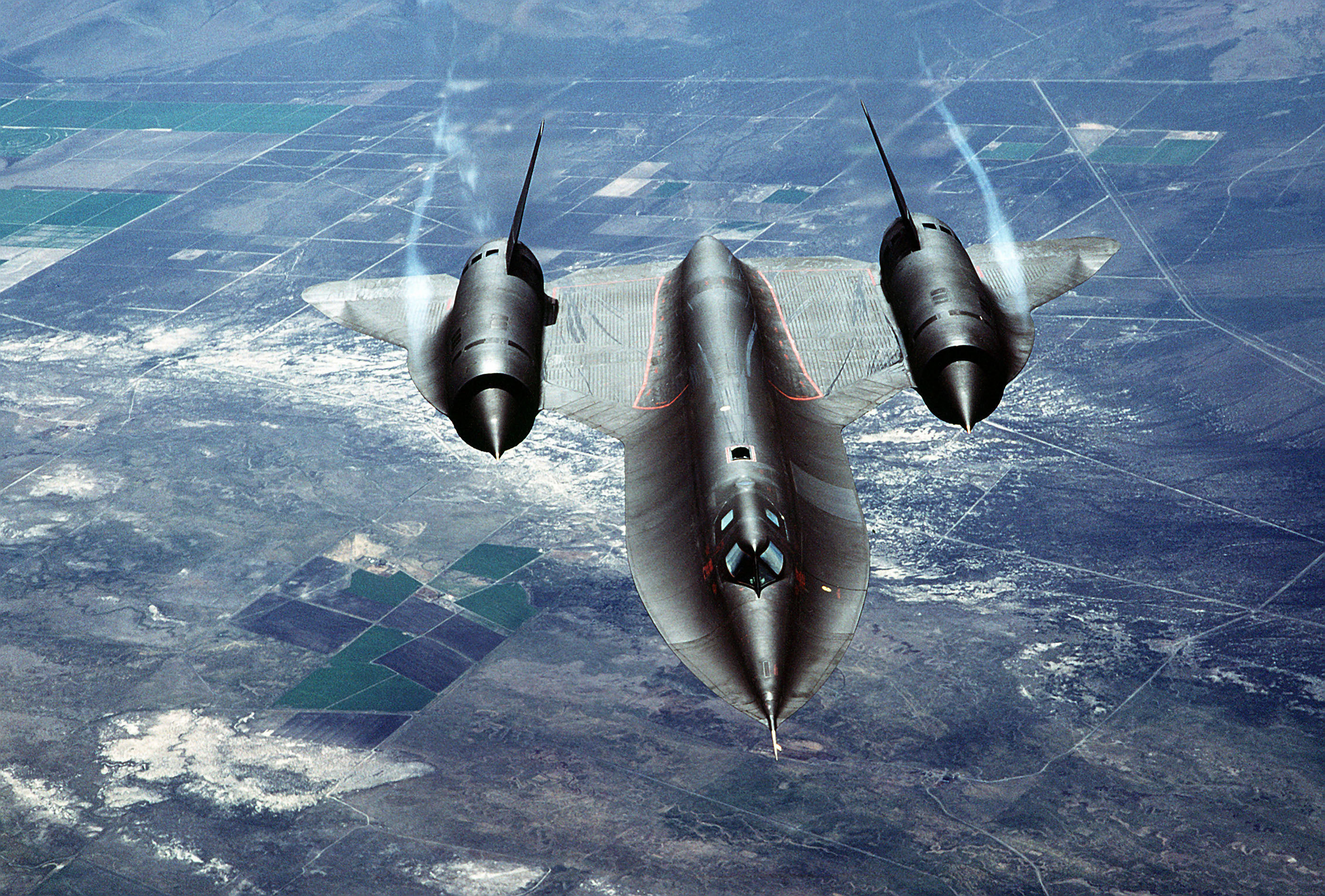
SR-71 BLACKBIRD BUILT FOR SPEED
Incredibly fast. Incredibly high.
Discover how speed helped this sky scout stay safe.
1964
- TOP SPEED
- Mach 3+
More than 3 times the speed of sound
- FLYING HIGH
- 85,000+ ft
Capable of flying over 16 miles up
- FLIGHT CREW
- 2 people
A pilot and a recon systems officer
A SCOUT
IN THE SKY
Reconnaissance is a big word for gathering information by observing a place. You can call it “recon” for short!
Think of a scout checking what lies ahead. The SR-71 used cameras and other sensors to gather information from the sky, helping military leaders understand what was happening below.
Its job was to bring back information. The SR-71 carried no weapons.
TOO FAST
TO CATCH?
The Blackbird could fly at more than 2,000 miles per hour. Its speed and great height made it extremely difficult for enemy aircraft and missiles to intercept it—that means reach it in time to attack.
Speed was one of its greatest defenses. Flying quickly through a dangerous area gave defenders less time to respond. Its design also helped reduce the radar clues it gave away.
For this sky scout, getting the information and getting home was the mission.
TWO PEOPLE.
ONE MISSION.
The pilot sat in front. Behind the pilot sat the reconnaissance systems officer, or RSO, who handled navigation and the equipment used to gather information.
Look at the rear cockpit photo. All those displays and controls helped turn a fast airplane into a working sky scout.

FAST FLIGHT.
SERIOUS HEAT.
Flying this fast creates an engineering problem: heat. As the aircraft rushes through the air, the air is compressed and rubs along its surface, heating the aircraft.
Much of the SR-71’s structure was made from titanium, a metal that can handle high temperatures while remaining light enough for an aircraft.
Engineers had to design for a hot aircraft in flight as well as a cool one on the ground. Keep that clue in mind for your final discovery!
THIS BLACKBIRD
MADE HISTORY
The SR-71 at the National Museum of the U.S. Air Force, serial number 61-7976, flew the type’s first operational mission on March 21, 1968.
That means it went to work on a real mission, beyond training or testing. Its crew was Jerome F. O’Malley and Edward D. Payne.

Sources & photo credits
Research checked September 8, 2026. “Sky scout” is a kid-friendly comparison. The heat explanation is simplified.
- National Museum of the U.S. Air Force: Lockheed SR-71A — first flight, speed, altitude, crew size, lack of armament, and the history of aircraft 61-7976.
- Lockheed Martin: Fastest Plane in History—The Blackbird — speed and altitude as defenses, reduced radar visibility, and the second crew position.
- Smithsonian National Air and Space Museum: Lockheed SR-71 Blackbird — reconnaissance equipment and crew responsibilities.
- NASA Glenn: High Supersonic Aircraft — heating, titanium, metal expansion, and sliding joints.
All three photos are explicitly labeled public domain in their official Air Force records, linked beneath each image. Flight: Tech. Sgt. Michael Haggerty, 020904-O-9999R-003. Rear cockpit: Ken LaRock, 200225-F-IO108-001. Museum aircraft: Ken LaRock, 200513-F-IO108-003.
Use of these images does not imply U.S. Air Force or Department of Defense endorsement. DoD imagery-use guidance ↗

“Did you know That the Sr-71 could survey 100,000 miles of the Earth’s surface in one Just one hour?”