


YOUR AIRCRAFT FIELD GUIDE
WRIGHT 1909 MILITARY FLYER THE ARMY GETS ITS FIRST AIRPLANE
A small airplane. A giant beginning.
Discover how the Wright brothers helped launch a new era of military flight.
1909
- MAXIMUM SPEED
- 42 mph
Early flight moved at a different pace!
- WINGSPAN
- 36 ft 6 in
From one wingtip to the other
- ENGINE POWER
- 30.6 hp
Horsepower measures an engine’s power
MEET
AIRPLANE NO. 1
On August 2, 1909, the U.S. Army bought the Wright Military Flyer for $30,000.
Its official name became Signal Corps Airplane No. 1. For nearly two years, it was the Army’s only airplane!
Imagine starting an entire airplane fleet with just one aircraft.
FROM 12 SECONDS
TO 72 MINUTES!
Remember the Wright brothers’ famous first powered flight?
On December 17, 1903, Orville Wright flew the Wright Flyer for just 12 seconds, traveling 120 feet.
Only six years later, the Wrights were testing an airplane for the U.S. Army.
On July 27, 1909, Orville Wright stayed airborne for 1 hour, 12 minutes, and 40 seconds with Lt. Frank Lahm aboard.
In just six years, a 12-second flight had become a flight lasting more than an hour!
And the testing wasn’t over. On July 30, 1909, Orville flew with Lt. Benjamin Foulois and averaged about 42 miles per hour, helping the airplane meet the Army’s speed requirement.
TAKE A SEAT.
YOU’RE OUTSIDE!
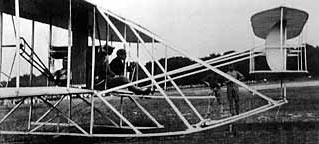
Look at this historic photo of Orville Wright and Lt. Frank Lahm preparing for takeoff.
Can you spot where they sit? There’s no enclosed cabin around them. Imagine feeling the wind as the airplane lifts into the sky!
AN AIRPLANE
NEEDS PILOTS
Buying an airplane was one challenge. Teaching Army officers to fly it was another.
In October 1909, Wilbur Wright taught Frank Lahm and Frederic Humphreys at College Park, Maryland.
Both flew solo that month. Solo means flying alone, without an instructor aboard.
A REPRODUCTION
WITH REAL HISTORY
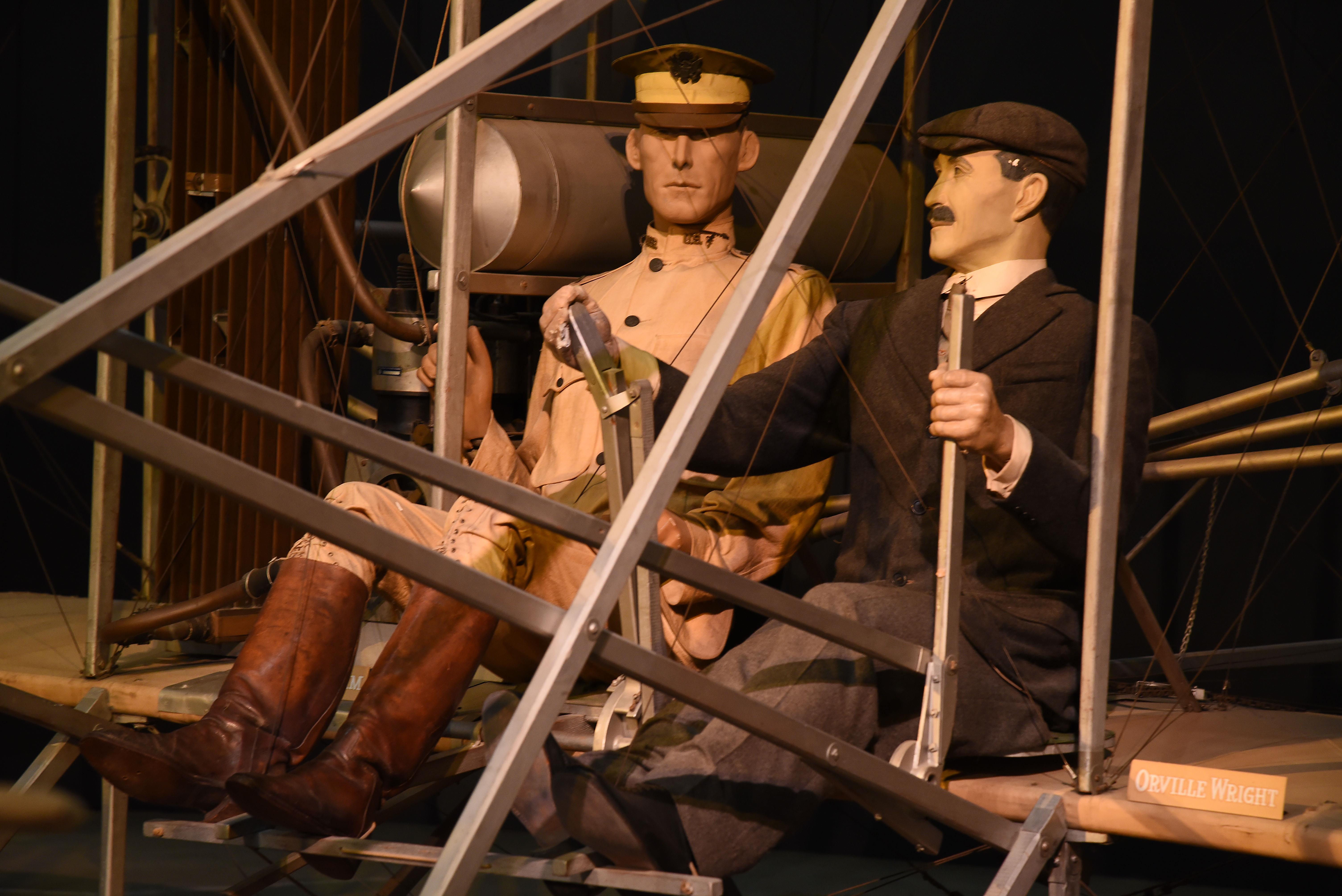
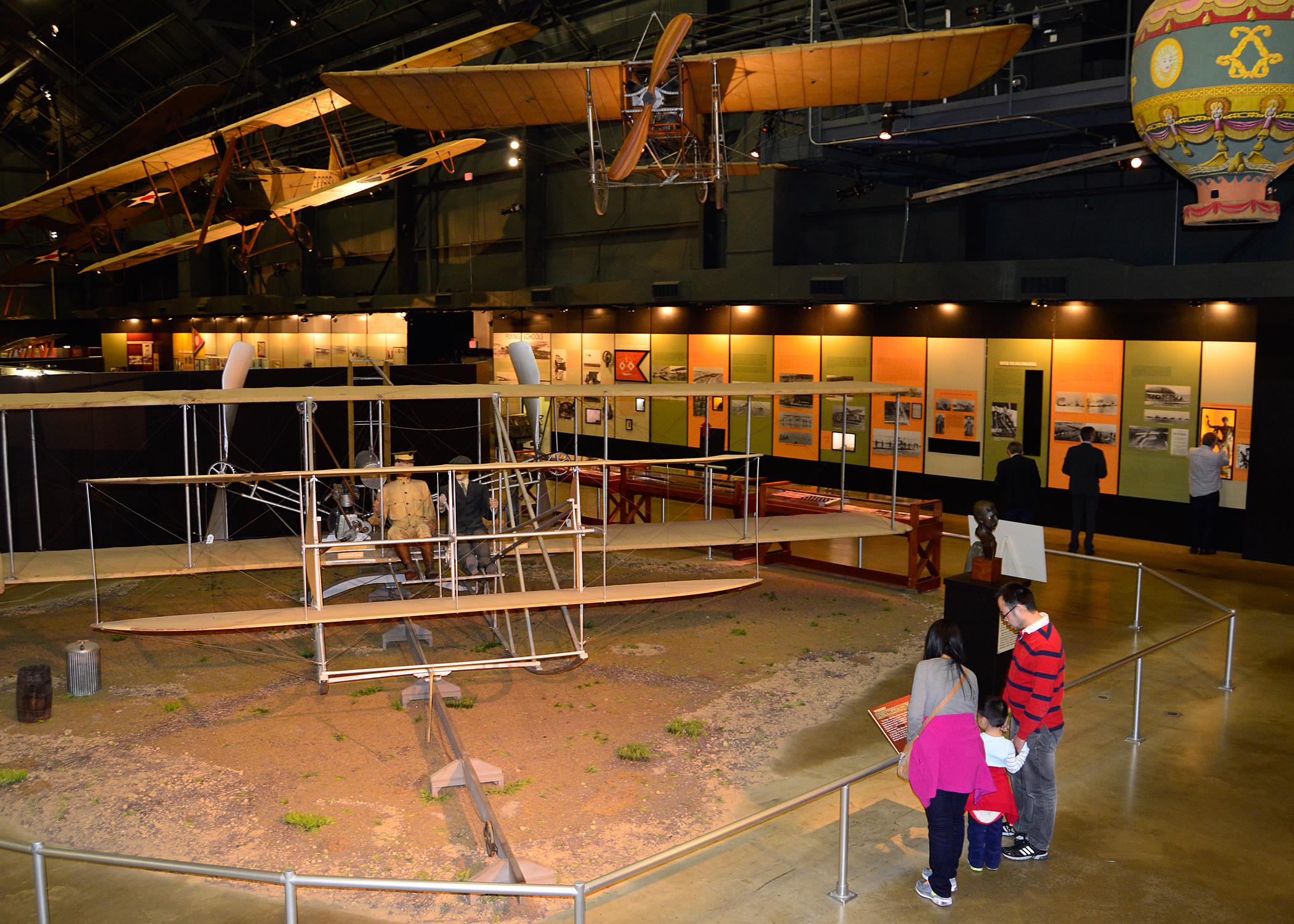
The Flyer at the National Museum of the U.S. Air Force is a carefully made reproduction—a copy built to represent the original aircraft.
Museum staff built it in 1955. Its engine was donated by Orville Wright. Its chains, sprockets, and propellers came from the Wright estate.
Sources & photo credits
Research checked September 8, 2026. Historical information comes from the National Museum of the U.S. Air Force and Smithsonian sources. The museum reproduction and original Army airplane are identified separately.
- National Museum of the U.S. Air Force: Wright 1909 Military Flyer — purchase, designation, specifications, retirement, and reproduction history.
- National Museum of the U.S. Air Force: Wright Brothers, 1909–1910 — flight trials, pilot training, and flying advice sent to Foulois by mail.
- Smithsonian: 1903 Wright Flyer — the Wright brothers’ historic 12-second, 120-foot first powered flight.
All three photographs are explicitly marked public domain in their official Air Force records, linked beneath each image. Museum photographs: Ken LaRock. Historic photograph: U.S. Air Force.
Use of these photographs does not imply U.S. Air Force or Department of Defense endorsement.
