


YOUR AIRCRAFT FIELD GUIDE
THE XB-70 VALKYRIE
A giant aircraft. An extraordinary idea.
Fly three times the speed of sound.
MACH 3
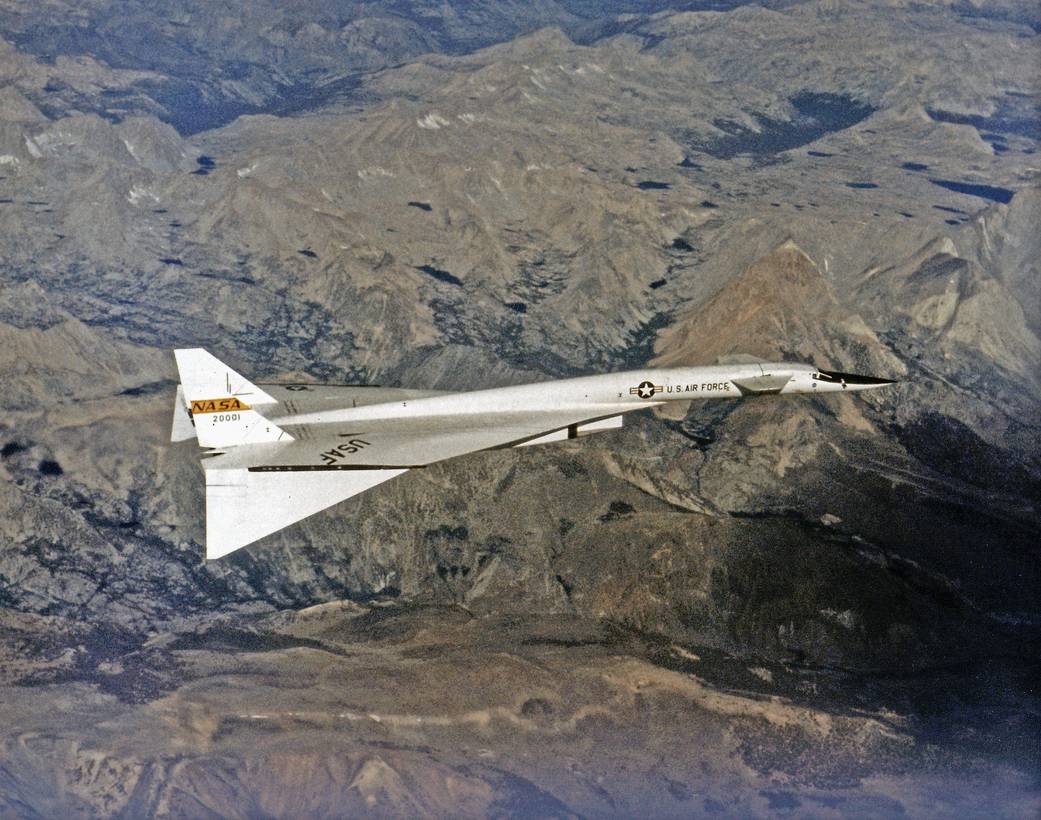
- DESIGNED TO CRUISE AT
- Mach 3
Three times the speed of sound
- POWERED BY
- 6 engines
Six jets. One enormous aircraft.
- MEASURING NEARLY
- 186 feet
From nose to tail
A BIG IDEA:
HIGHER & FASTER
In the 1950s, the U.S. Air Force wanted a bomber that could fly so high and fast that enemy defenses would struggle to stop it.
North American Aviation’s answer was the Valkyrie: a design intended to carry nuclear weapons at roughly 70,000 feet and cruise at Mach 3—three times the speed of sound.
A GIANT
BUILT FOR SPEED
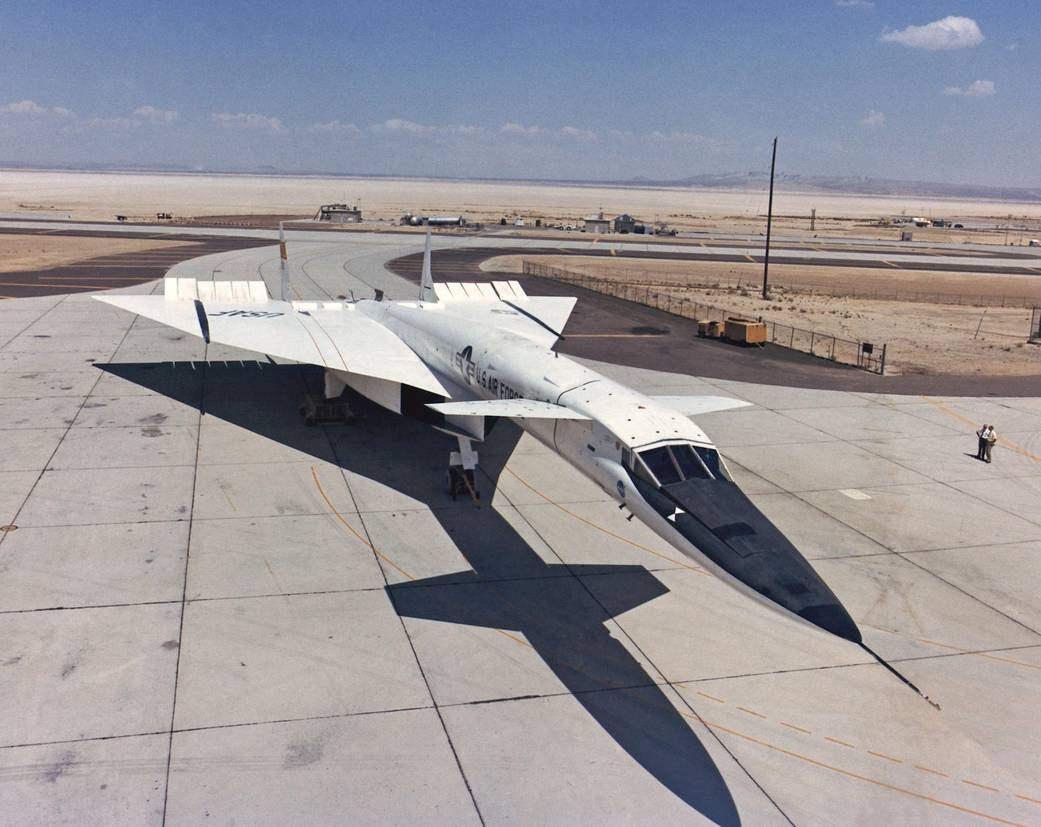
Nearly 186 feet long and powered by six jet engines, the XB-70 had an unmistakable shape. Its long nose stretched ahead of a huge triangular wing.
Smaller wings near the cockpit, called canards, were another distinctive feature.
RIDING ITS OWN
SHOCK WAVE
The Valkyrie had an unusual way of helping itself stay aloft. At supersonic speeds, its shape used high-pressure air behind a shock wave beneath the aircraft to produce extra lift.
This idea is called compression lift. Its outer wingtips could also fold downward during fast flight, helping improve stability.
The air beneath the aircraft could help hold it up.
A DIFFERENT
MISSION
Before the XB-70 first flew in 1964, its future had already changed. New surface-to-air missiles threatened high-flying bombers, while intercontinental ballistic missiles offered another way to deliver nuclear weapons.
The bomber program was canceled in 1961. Two XB-70s were completed as experimental aircraft. They helped researchers investigate large aircraft flying at supersonic speeds.
THE VALKYRIE’S
LASTING LEGACY
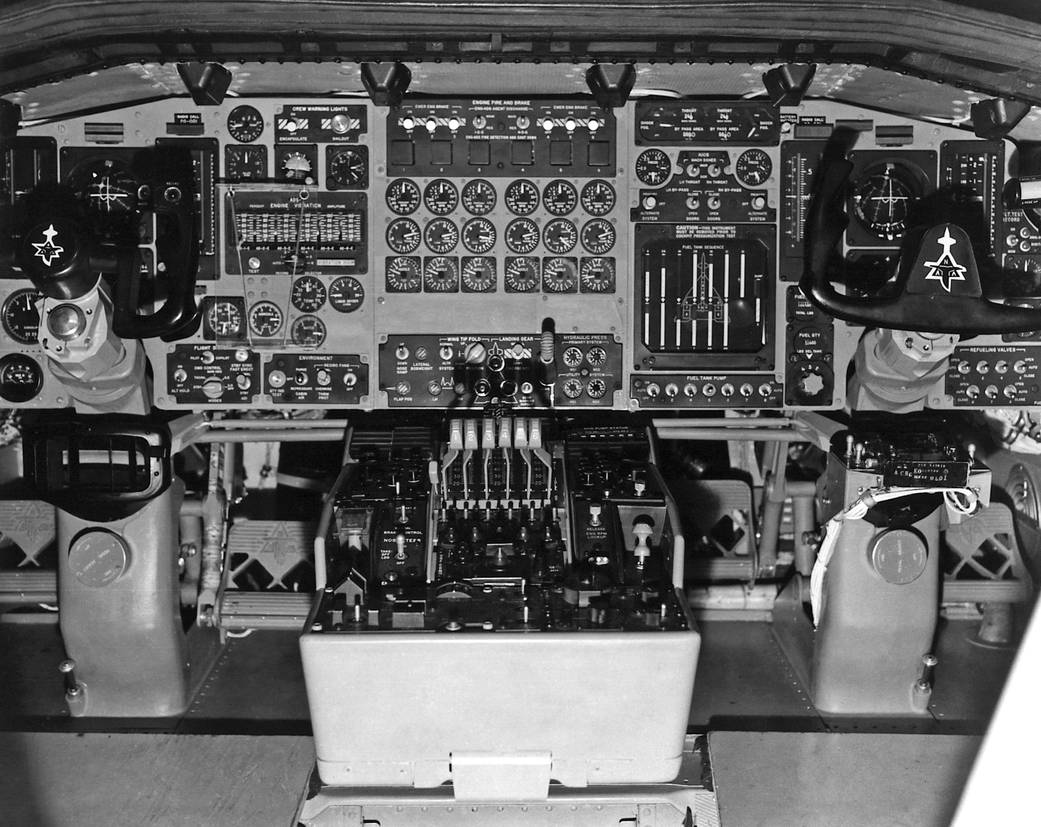
The second XB-70 was lost in a midair collision in 1966 that killed two pilots. The surviving aircraft continued research, helping NASA study sonic booms, aircraft handling, and other challenges facing future supersonic transports.
Today, the only remaining XB-70 is preserved at the National Museum of the U.S. Air Force. Its extraordinary shape offers a chance to see how engineers turned an ambitious idea into a real flying machine.
Sources & photo credits
Guide research: National Museum of the U.S. Air Force: XB-70 fact sheet; NASA: XB-70 research history; Museum Research & Development Gallery.
Archival photographs: NASA. Each caption links to its original record. These NASA photographs are U.S. government imagery, used here for educational purposes. See NASA’s image-use guidelines.